How DWeb Camp is Being Built in Berlin
At the legendary c-base, technologists, activists, and artists gathered to shape the next chapter of the decentralized web.
By Wendy Hanamura
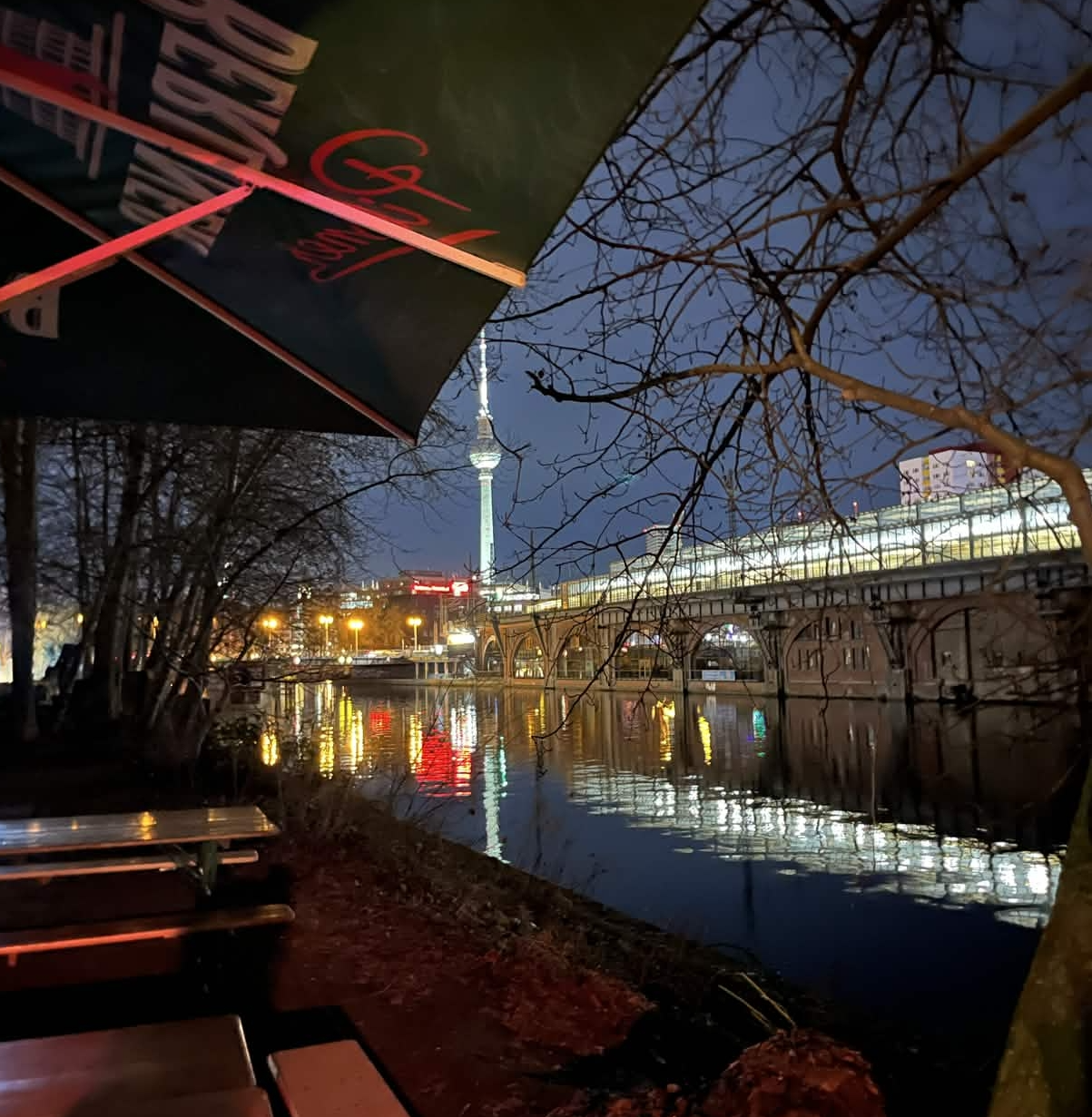
On a gray February morning in Berlin, people wandered down a dark ramp into a space station.
Not a metaphorical one—at least not entirely. c-base, with its blinking lights, maze of cables, and decades of hacker lore, has long described itself as a space station that crashed on Earth 4.5 billion years ago. Since the mid-1990s it has been a gathering place for coders and tinkerers who prefer to build the future themselves rather than wait for it to arrive.
On this particular morning, they had come to design something new.
In February, an invitation had circulated across Europe’s decentralized technology networks: come to c-base and help shape the next DWeb Camp, a five-day gathering that will take place this July in the forests of Brandenburg.
There was no fixed agenda, and no finished plan.
Just a question.
If we were to build the next version of DWeb Camp together, what might it look like?
Before long, the room filled. Peer-to-peer developers had come from Edinburgh, free-software advocates from Berlin, privacy-first technologists from Shanghai, and policy thinkers from Copenhagen. Artists, funders, open-source builders, and organizers filtered in carrying laptops and winter coats. Most of them had never met before.
They had come not just to attend—but to help build something.
The timing was not accidental. Across the world, the systems shaping the internet—and increasingly public life—are consolidating. Governments tighten control. Platforms encroach on our privacy. The internet as we know it is splintering, and along with it, our consensus about what is true. For many in the room that morning, the pressing question was can we restructure the web before it hardens into something more destructive than its early architects ever imagined?
DWeb Camp, first held in Northern California in 2019, grew out of that concern. The gathering was conceived as a place where technologists, artists, organizers, and policymakers might come together to begin building a more decentralized web.
A web built less like a pyramid and more like a forest. Distributed. Resilient. Sharing resources underground.
This summer, DWeb Camp’s theme is “Root Systems,” and it moves to Europe for the first time. The meeting at c-base was an early step in imagining what might grow there.
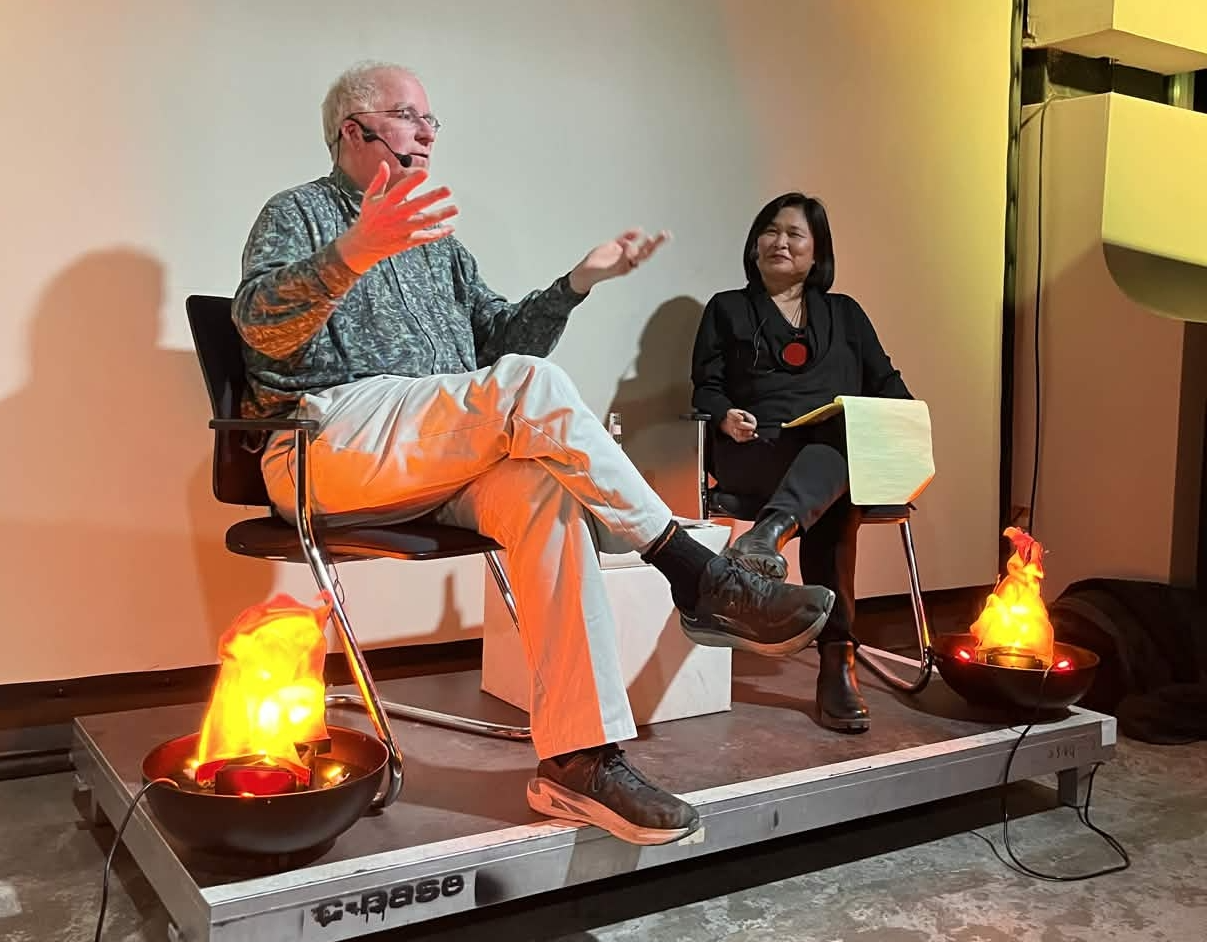
Origins of a Decentralized Gathering
It feels like I’m coming home,
Brewster Kahle, founder of the Internet Archive, said when he opened the morning.
Kahle traces some of the inspiration for DWeb Camp to the Chaos Communication Camp, the sprawling hacker gathering he first attended in 2003. But his vision was always more focused: an event where technologists could work alongside artists, organizers, and policymakers to imagine and build the infrastructure of a decentralized web.
A web that’s more private, more reliable, but still fun,
he said, hopping up and down. A web with many winners.
Collective Intelligence
At c-base, Kahle and a dozen core organizers didn’t arrive with a finished program. Instead they facilitated breakout conversations, solicited unconference topics, and most importantly, listened.
Throughout the day, small circles formed across the space station, and similar themes surfaced again and again.
Not everything, participants suggested, needs to scale to billions of users. Perhaps some of the most important decentralized tools will serve smaller networks—families, communities, groups of collaborators who know one another. An intimate web, as some people called it, rather than the global one.
Others spoke about shared infrastructure in a broader sense: not just software, but the resources communities could distribute. Buildings. Time. Convenings. Knowledge.
The question, several people suggested, was not simply how to build better tools but how to sustain the ecosystems that allow those tools to exist.
Holke Brammer, of the Hypercerts Foundation, offered a framework that drew nods around the table.
It’s said, first you need the values,
he recited.Then governance.
Then the right incentives.
And finally the technology to build it.
DWeb Camp tries to bring all of those layers together in the same place at the same time. Which means inviting not just engineers but researchers, economists and storytellers.
Marek Tuszynski, co-founder of Tactical Tech, offered a wry observation about how the technology world often divides itself.
They say technology is inspired in San Francisco,
he recounted. It’s built in China. And criticized in Europe.
The challenge, he suggested, was to move beyond those boxes—to collaborate across them.
Later, when participants were asked what would make the camp most valuable, one answer surfaced repeatedly.
To find the people I want to work with after Camp,
someone said, and figure out how to keep working together on an on-going basis.
Grounded in Place
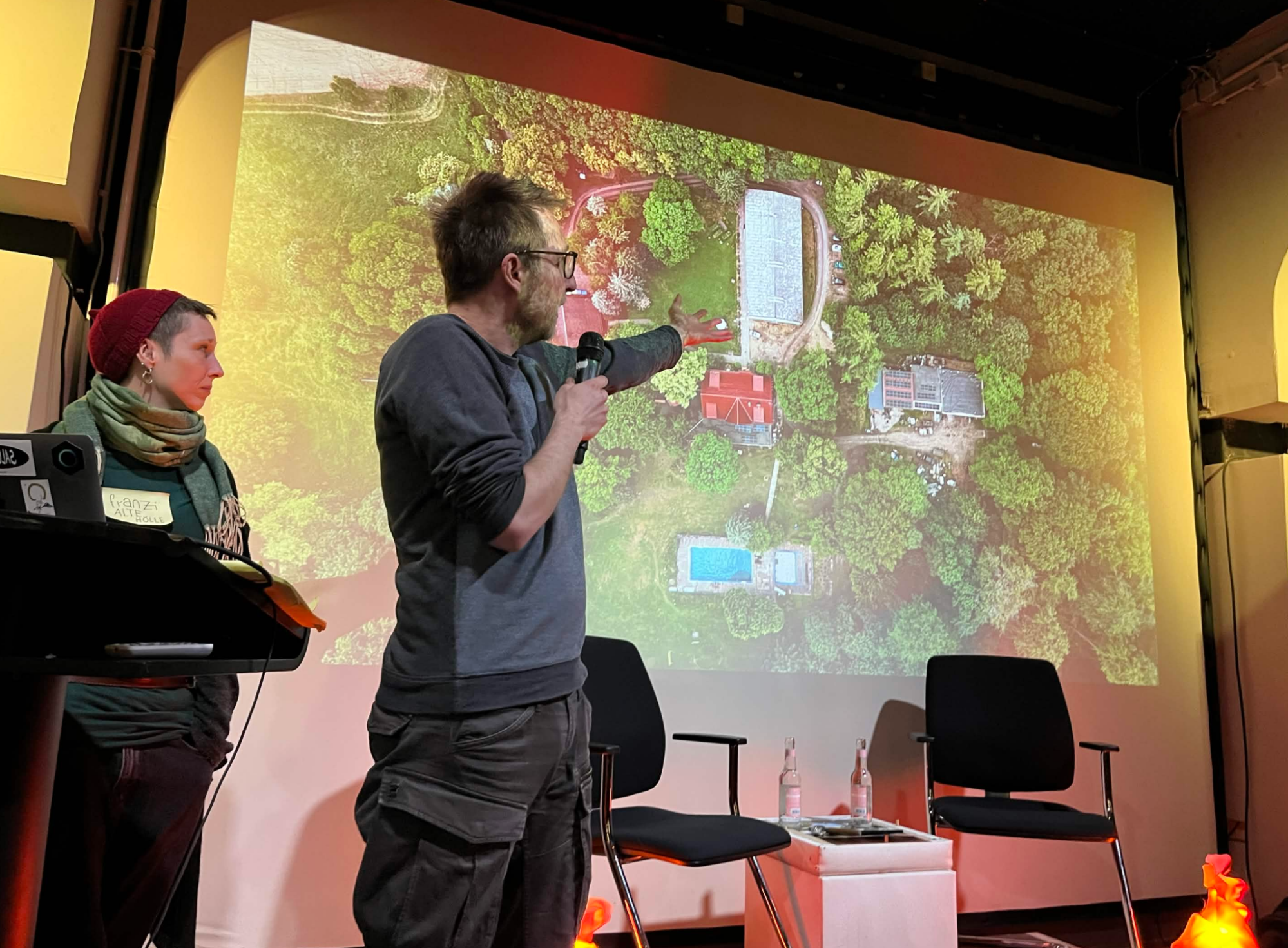
DWeb Camp has always been shaped by the places where it occurs.
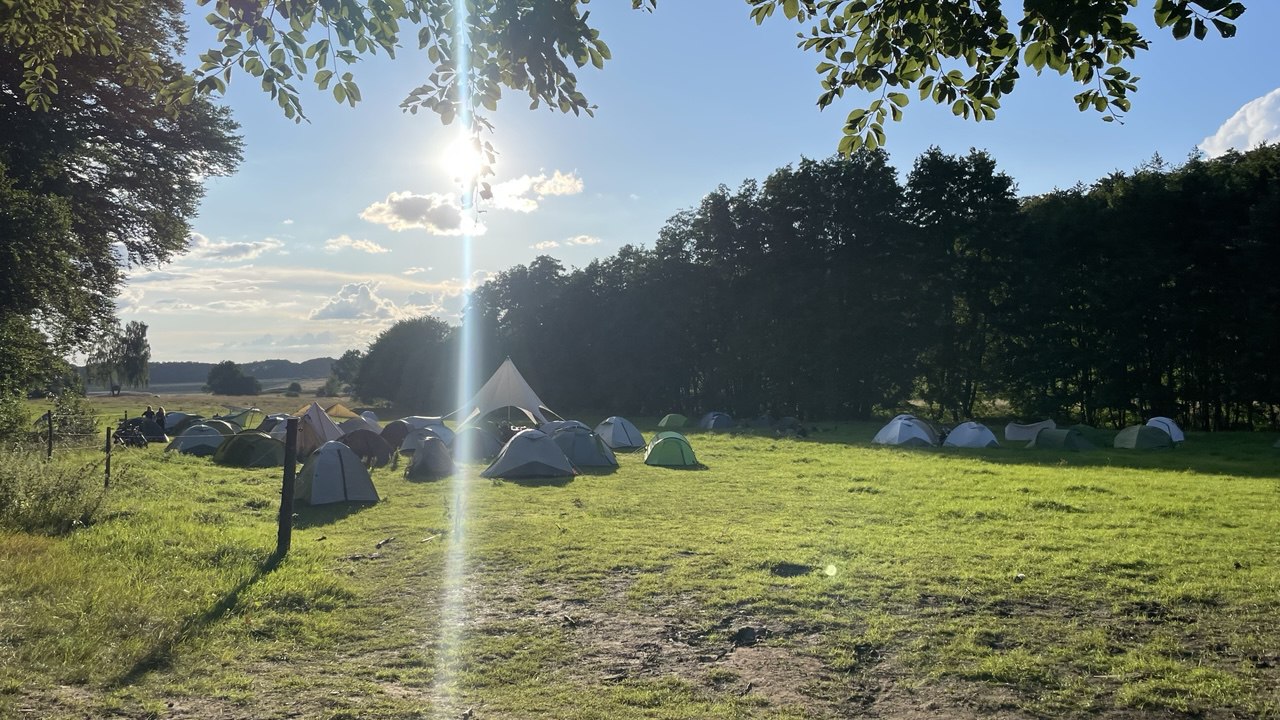
When organizers began looking for a European site, they eventually settled on Alte Hölle, a forested property in Brandenburg about an hour southwest of Berlin.
The decision had as much to do with the people stewarding the land as with the landscape itself.
In 2021, a collective of friends who met at Chaos Communications Camp purchased the property—once a Stasi recreation site—with the intention of turning it into a long-term gathering place for artists, hackers, and activists.
Their question was straightforward.
Why build a camp only to dismantle it a few days later? Why not create infrastructure that could remain?
Two of the site’s stewards, Franzi and Marv, joined the gathering at c-base. Rather than simply presenting the site, they participated in the discussions, listening carefully to the people who will soon gather there.
We share a lot of the same values,
they said. We are a volunteer group that supports [you] and is an ally for [your] event.
The goal, for DWeb organizers, is not merely to occupy Alte Hölle but to contribute to it—to plant something, rather than simply passing through.
Partners with Principles
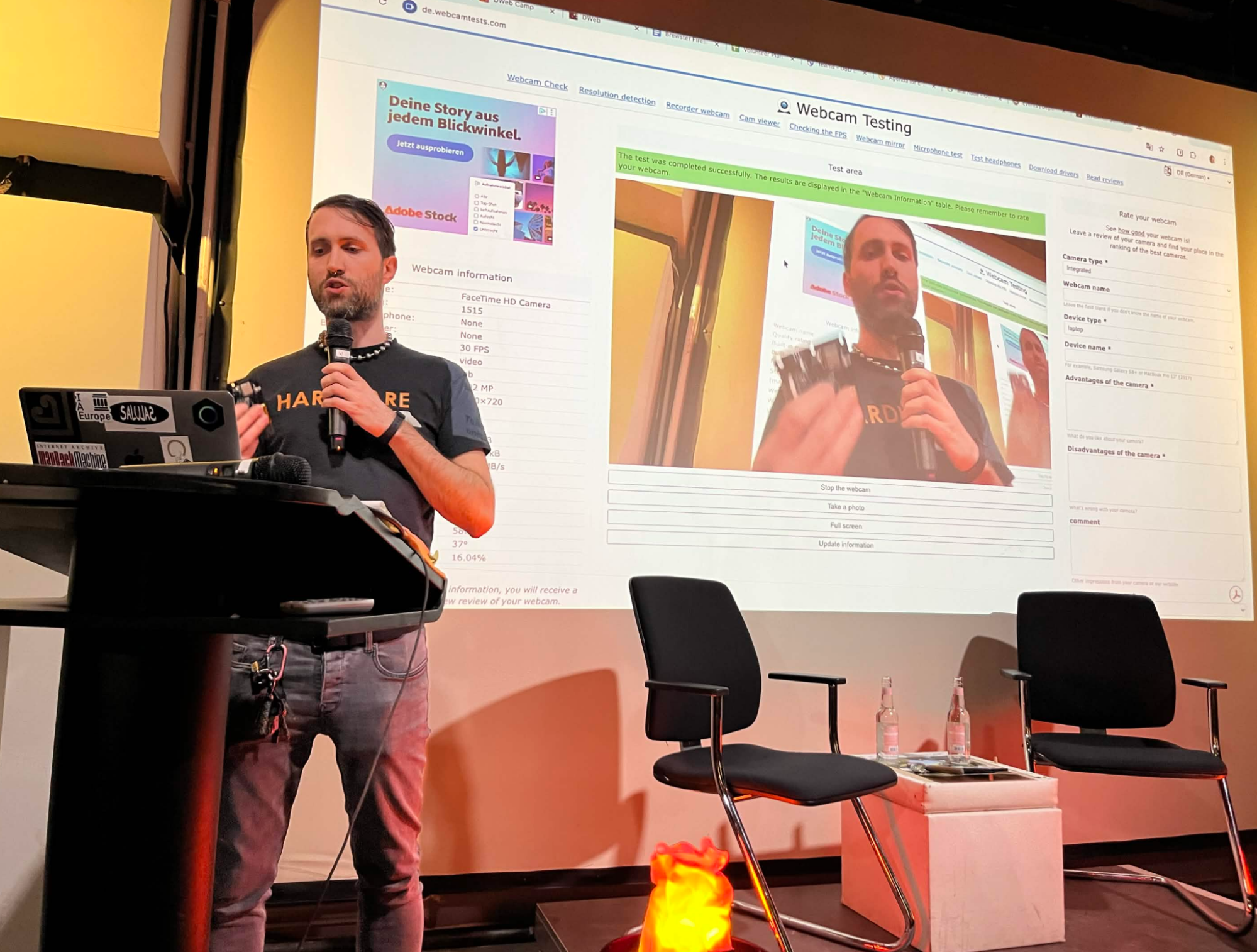
Strong collaborators don’t just support your vision. They push you to live up to it.
Berlin’s Department of Decentralization (DoD)—a collective formed after organizing ETHBerlin in 2018—has encouraged DWeb Camp organizers to align our tools more closely with our principles. That means prioritizing open-source infrastructure wherever possible.
Tickets will be sold through PreTix.
The schedule will run on PreTalx.
Collaborative documents will live on CryptPad.
Camp communications will be via Matrix.
Tools designed with privacy and security in mind.
Not just talking about decentralization, but practicing it.
Building Across Borders
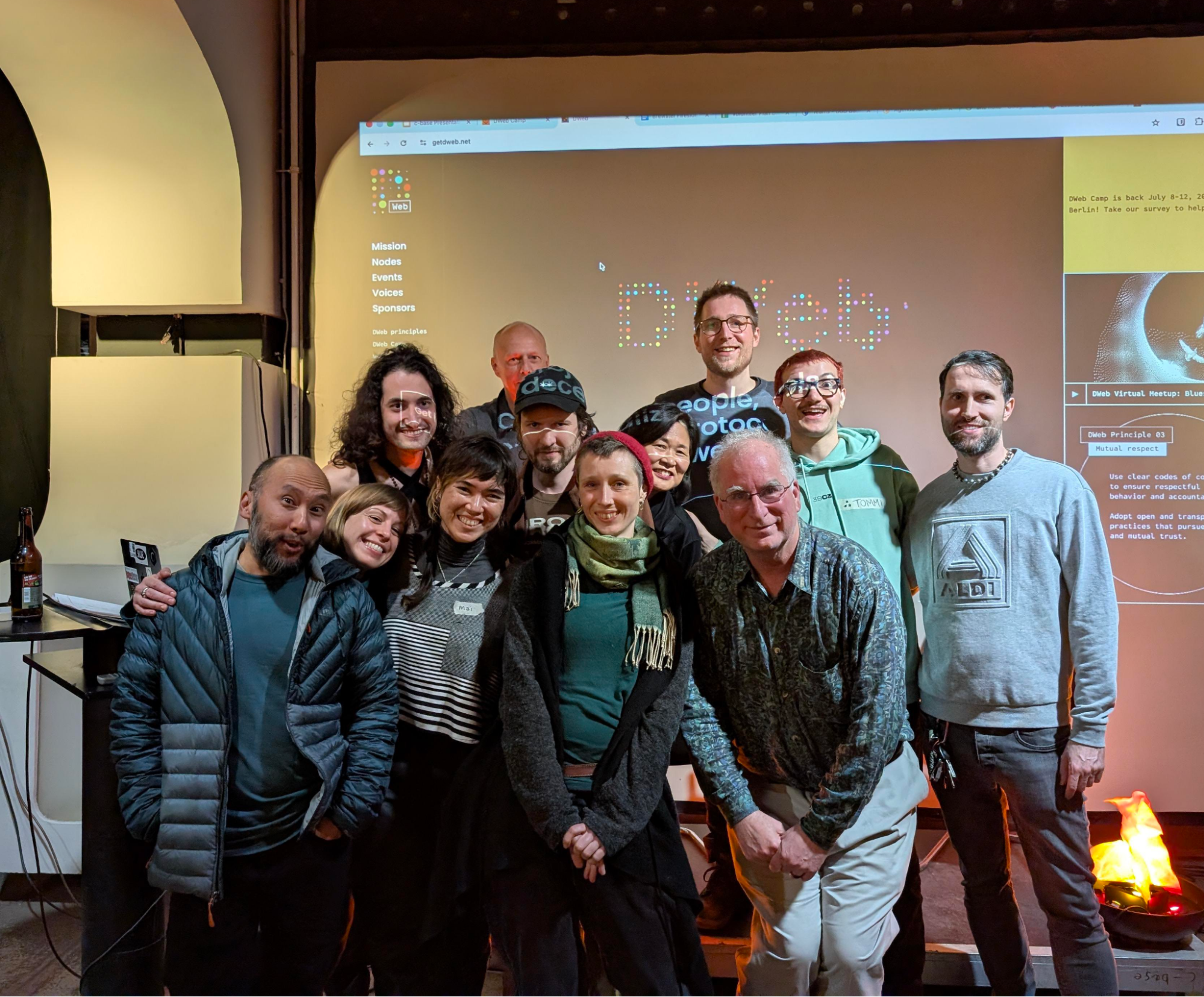
The organizers of DWeb Camp 2026 are based across North America and Europe and have lineages from around the globe—Nigeria, Russia, Germany, France, Italy, Ukraine, Canada and the United States.
Toward the end of the day at c-base, Kahle returned to a theme that was disarmingly simple.
Welcome.
This is a really special community…they welcomed me twenty years ago,
he said. You may not be aware of the effect you have by saying ‘welcome’ to somebody from a foreign place. I think it is a hallmark of a community that is living and thriving.
That small gesture, he suggested, can shape the direction of entire communities. I hope that DWeb Camp is to your liking, if it's not, say so, and let’s basically make it better. Let’s build something together.
Because DWeb Camp has never been a finished product.
It is something closer to a living system. It’s shaped by the people who show up, the relationships they form, and the ideas that take hold.
And in the forests of Brandenburg this July, those connections—technical, social, and human—will begin to spread beneath the surface.
Like any root system, their real strength may lie in what we cannot see.
